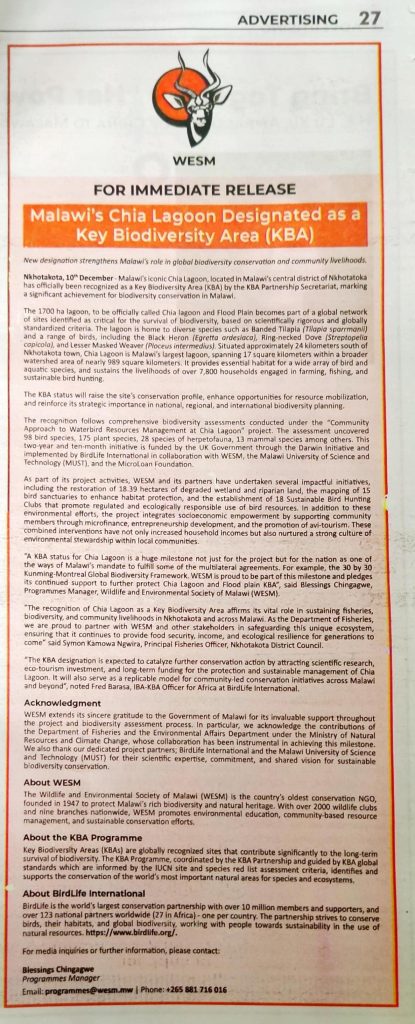
Malawi’s conservation landscape reached a historic milestone this January with the official designation of Chia Lagoon and Flood Plain as a Key Biodiversity Area (KBA). This global recognition, announced by the Wildlife and Environmental Society of Malawi (WESM) and the KBA Partnership Secretariat, highlights the lagoon’s critical role in the world’s natural heritage.
But what exactly makes this site so special, and how does it fit into the wider map of Malawi’s protected wonders?
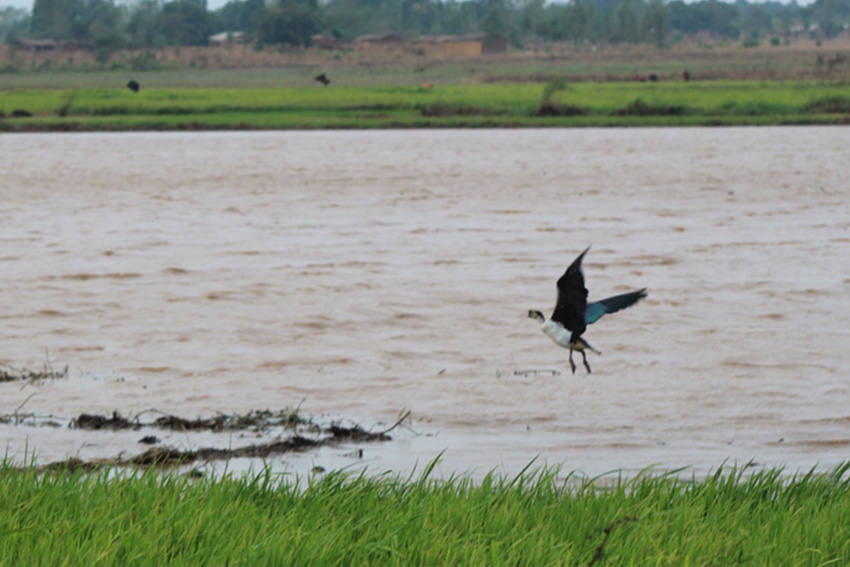
Chia Lagoon: A sanctuary in Nkhotakota
Located 24km south of Nkhotakota boma, Chia Lagoon is Malawi’s largest lagoon, covering roughly 1,700 hectares. Its designation as a KBA is due to the variety of life supported by its waters and surrounding floodplains. Key findings from recent biodiversity assessments include:
- Diverse Avian Life: Over 98 bird species call the lagoon home, including the Black Heron and Lesser Masked Weaver.
- Botanical Richness: The area supports at least 175 plant species.
- Livelihood Support: Beyond its beauty, the lagoon supports over 7,800 households, providing essential fisheries and sustainable resources for local communities.
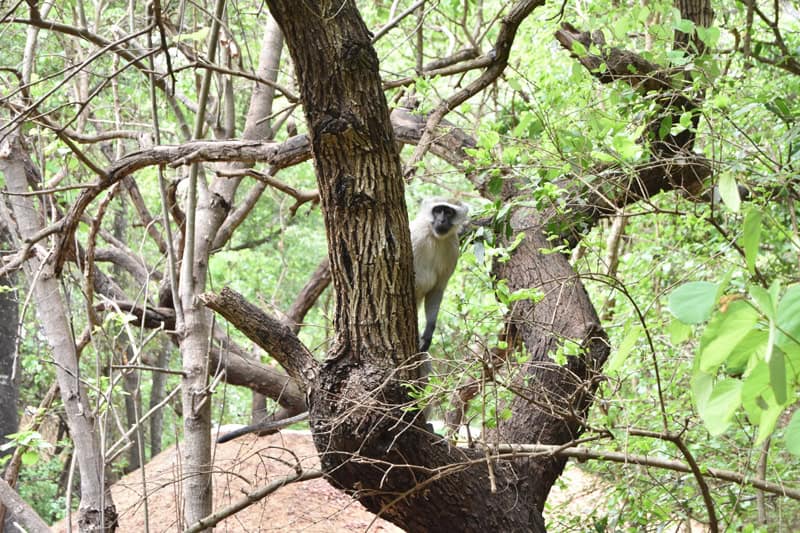
- 28 herpetofauna species and 13 mammal species, among others.
This achievement is the result of years of community-led restoration work, including the creation of bird sanctuaries and the reforestation of degraded riparian lands. A lot of this work has been led by WESM.
Other notable Key Biodiversity Areas in Malawi
Chia Lagoon joins a list of sites in Malawi that have met the rigorous scientific standards set by the IUCN to be considered nature’s hotspots. These biodiversity locations include:
Lake Malawi National Park: A UNESCO World Heritage site and a KBA famous for its hundreds of endemic cichlid fish (mbuna) that are found nowhere else.
Elephant Marsh: Situated in the Lower Shire Valley, this vast wetland is a haven for waterbirds and the unique Cholo bream.
Nyika National Park: Malawi’s highest plateau, acting as a biological island with over 200 species of orchids, many of which are endemic.
Mulanje Mountain: Recently recognised as a UNESCO World Heritage site, this “island in the sky” is a KBA due to its unique high-altitude cedar forests and endemic reptiles.
Malawi Hill: A small but vital forest patch in the south that is the last refuge for the Chapman’s pygmy chameleon, a species once feared extinct.
Why this matters for Malawi’s future
These Key Biodiversity Areas are the backbone of Malawi’s ATM Strategy and Tourism Investment Master Plan. By protecting these sites, Malawi isn’t just conserving nature; it is building a foundation for sustainable tourism. The protection of sites like Chia Lagoon ensures that the Warm Heart of Africa remains a vibrant, green, and prosperous home for both its people and its wildlife.